
Appalachian Anecdotes
Subscribe and receive email notifications of new blog posts.
 RSS Feed
- 2022 | 15 Posts
- 2021 | 24 Posts
- 2020 | 26 Posts
- 2019 | 11 Posts
- 2018 | 6 Posts
- 2017 | 3 Posts
- 2016 | 19 Posts
- 2015 | 4 Posts
27
Closing Costs: What's that Set of House Keys Going to Cost Me?
"Closing costs" is a confusing term. Depending upon who you're talking to, it can encompass various monies which will be required of a buyer in order to get up from a closing table with a new set of keys (hopefully with a  Heritage Real Estate keyring attached). There are numerous charges and fees involved and buyers frequently get the terms mixed up. More often than not, neither lenders nor Realtors thoroughly and clearly explain things to the buyer.
Firstly, there is a difference between "closing costs" and "down payment," something first-time buyers frequently misunderstand. I recently had a deal go south because the buyer's agent didn't bother to explain to him that "zero down" didn't mean there were no costs involved. Imagine his surprise when, two weeks into our contract, he learned he had to come up with $4,000 in closing costs.
Your "down paymen...
17
The Danger in Doing the Deed - Pitfalls for Unmarried Home Buyers
I was sitting in a local coffee shop with a nice, young couple giving them my crash course in first-time home buying; everything from loan pre-approval to the costs involved, to inspection contingencies and contract clauses.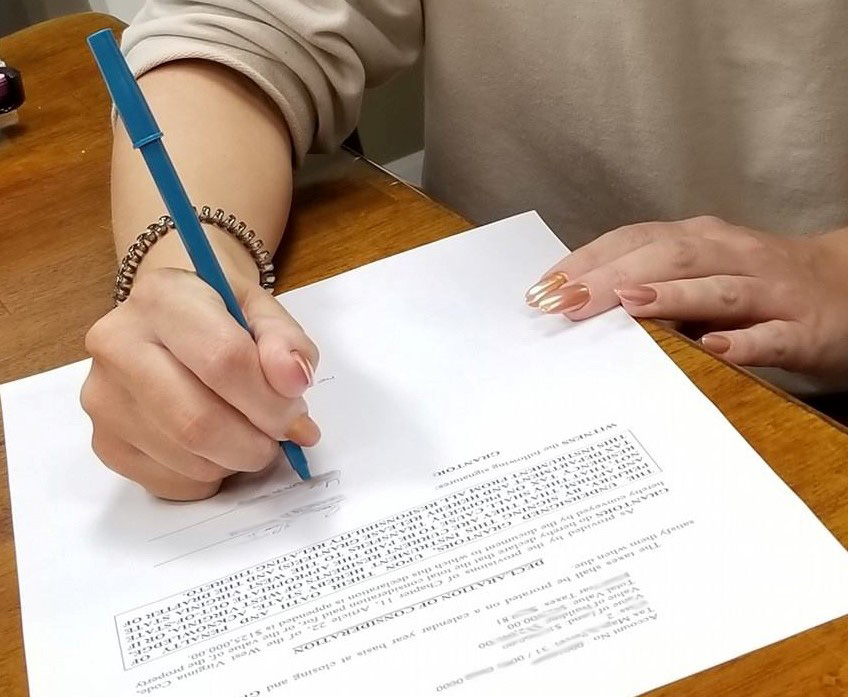
They'd dated since high school, been engaged for a couple of years, were about to be married, and ready to start shopping for their first home. "Is there anything we need to know," he asked, "since we're not married yet?" It was an astute question.
A lot of things have changed about the real estate business since I got into it nearly 20 years ago, including the number of unmarried young people buying homes together. A surprisingly common scenario is one in which young, first-time home buyers have only been dating a few months and decide to save on rent and buy a house. Often, one of...
25
Blossoms in Fall
I sell houses to support my farming habit. To call myself a farmer would be an insult to all the real farmers since the Lord “put Adam in the Garden of Eden to till it and keep it.” To the men and women who have, and do,  eke their living from the ground, I tip my pink camo Tractor Supply cap. I wish there were more like you; we’d be a better nation, a better world.
But I’ve had my share of planning, planting, struggling, sweating, nurturing, joy, wonder, loss, and failure, followed by mustering strength and hope, and trying again. Each fall, the old farmer saying, “There’s always next year,” has consoled me when little went as I’d planned.
I planted my first 83 apples trees here at Zion Heritage Farm in the fall of 2013. It took me three days. When the last tree went in the ground, I...
19
DO I NEED BUYER’S TITLE INSURANCE? -- Part II
 My previous blog regarding buyer's title insurance (aka owner's title insurance) outlined the differences between lender's and owner's policies, and some of the serious pitfalls of not purchasing your own title policy at closing. An owner's title policy is different from a lender's title policy; it protects the homeowner from things a title search might have missed. It's a one-time payment made at closing, probably $300-$400, which covers the you for as long as you own the home.
But don't just take it from me. Bridget is a title insurance provider for a major title insurance company. She was kind enough to contribute this blog, and summed it up far more eloquently than I could. Here's what she has to say.....
"As a W...
15
DO I NEED BUYER’S TITLE INSURANCE? -- Part I
As both a real estate and mortgage broker in the state of Florida for many years, when I moved to my real estate company to West Virginia, I was surprised at the many differences between how things are done  in the Sunshine and Mountain States.
In real estate there is national law, state law, and just plain how-we-do-it-around-here. That latter category covers a surprising number of things, including who pays for what at closing, how commissions are shared between Realtors, home inspections, and terminology, to name a few.
One of the big differences is that, in West Virginia, buyers rarely purchase Buyer’s Title Insurance (also known as Owner’s Title Insurance, or an Owner’s Title Policy) at closing. In Florida, virtually all buyers are provided with owner’s title insurance, which is customarily paid for by the selle...
 Bill Porter, Broker
(304) 612-3746
Bill Porter, Broker
(304) 612-3746207 Aurora Dr
Morgantown, WV 26508
WEST VIRGINIA LICENSES BROKER WVB240300963
AGENCY 010271-00


 Translate

Office License No. 010271-00