
Subscribe and receive email notifications of new blog posts.
 RSS Feed
- 2022 | 15 Posts
- 2021 | 24 Posts
- 2020 | 26 Posts
- 2019 | 11 Posts
- 2018 | 6 Posts
- 2017 | 3 Posts
- 2016 | 19 Posts
- 2015 | 4 Posts
25
Blossoms in Fall
I sell houses to support my farming habit. To call myself a farmer would be an insult to all the real farmers since the Lord "put Adam in the Garden of Eden to till it and keep it." To the men and women who have, and do,  eke their living from the ground, I tip my pink camo Tractor Supply cap. I wish there were more like you; we'd be a better nation, a better world.
But I've had my share of planning, planting, struggling, sweating, nurturing, joy, wonder, loss, and failure, followed by mustering strength and hope, and trying again. Each fall, the old farmer saying, "There's always next year," has consoled me when little went as I'd planned.
I planted my first 83 apples trees here at Zion Heritage Farm in the fall of 2013. It took me three days. When the last tree went in the ground, I could barely stand and walk down off the hill. It has been a long, hard, often elating, sometimes heartbreaking – to say nothing of incredibly expensive - four years. The last two have been the most difficult.
Today, I have some 365 apple trees, of 70 or so varieties, in the ground. Most are in worse condition than they were the year I planted them. Some of the setbacks have been due to my own lack of knowledge and experience, insufficient infrastructure, and shortage of time, as I try to juggle my more than full-time day job as a real estate broker with farm duties. But the two most significant setbacks - the 17-year cicada plague of 2016 and heavy deer pressure – have compounded for substantial loss this year.
Blissfully ignorant of the existence of 17-year cicadas, I didn't know what was upon me until it was too late. I had no idea they were coming, only learning of it when their chirruping began filling the air. Even then, I was unprepared for the damage they would inflict. They ignored my organic bug deterrents, and wreaked incalculable damage to my young saplings, which were already heavily damaged by deer. Without exception, every tree on the farm was stunted, branches dying from the myriad gaping lesions the females leave when inserting their eggs into tender bark. Several trees died over winter, unable to overcome the compounded damage. Others I had to prune to "whips" this spring, setting them back two years or more.
Many of the trees which did survive the winter were so weakened they struggled throughout the summer. Then, mid-summer, four bucks moved into the orchard and have caused unbelievable damage. Tree trunks are completely girdled, bark stripped entirely away, leaving trees which cannot survive. More than 200 trees have branches and central leaders broken in pieces, as they raked them with their antlers. Apples are stripped away entirely; only a few stragglers hang here and there. They will finish off the few that are left soon. A walk through the orchard today found more than a half-dozen dead trees the bucks have completely mowed over, trampling and tearing with hoof and antler. The damage is incredible, heartbreaking, and financially sickening. More trees will die in the coming winter.
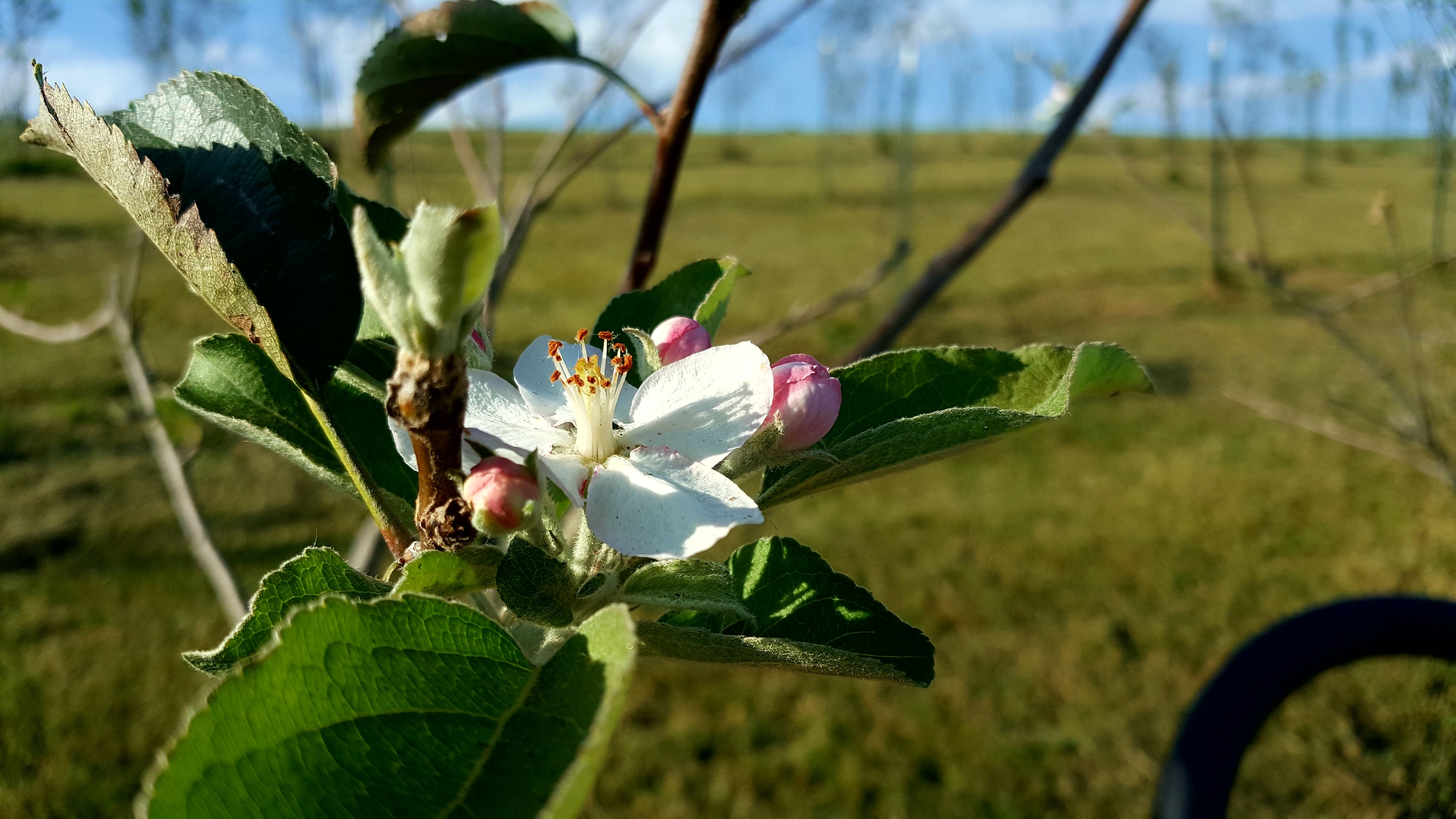
As I came down off the hill tonight, it would have been easy to have felt discouraged and defeated. But passing through the trees, several had blossoms on them. I don't know why apple trees get confused in fall, and sometimes bloom. They won't turn into apples, of course. But every autumn, a few flowers dot the otherwise bare branches; delicate, pink promises of the spring to come. "There's always next year," they pledge, "and it will be better."
I've grown the infrastructure this year, adding an irrigation pond and watering system. It's not quite up and running yet, but it will be by spring of 2018. And the deer fence for which I've been madly squirreling away money, started going up yesterday. Sure, there will be new challenges. Lord only knows what fresh, new pests and plagues await next year.
But farming is a vocation of hope. And just as the Lord's mercies are new every morning, so the promise of the earth is new every spring.
 Bill Porter, Broker
(304) 612-3746
Bill Porter, Broker
(304) 612-3746207 Aurora Dr
Morgantown, WV 26508
WEST VIRGINIA LICENSES BROKER WVB240300963
AGENCY 010271-00



 Translate

Office License No. 010271-00