
Subscribe and receive email notifications of new blog posts.
 RSS Feed
- 2022 | 15 Posts
- 2021 | 24 Posts
- 2020 | 26 Posts
- 2019 | 11 Posts
- 2018 | 6 Posts
- 2017 | 3 Posts
- 2016 | 19 Posts
- 2015 | 4 Posts
27
Saving Tomato Seeds - Now That's Italian!
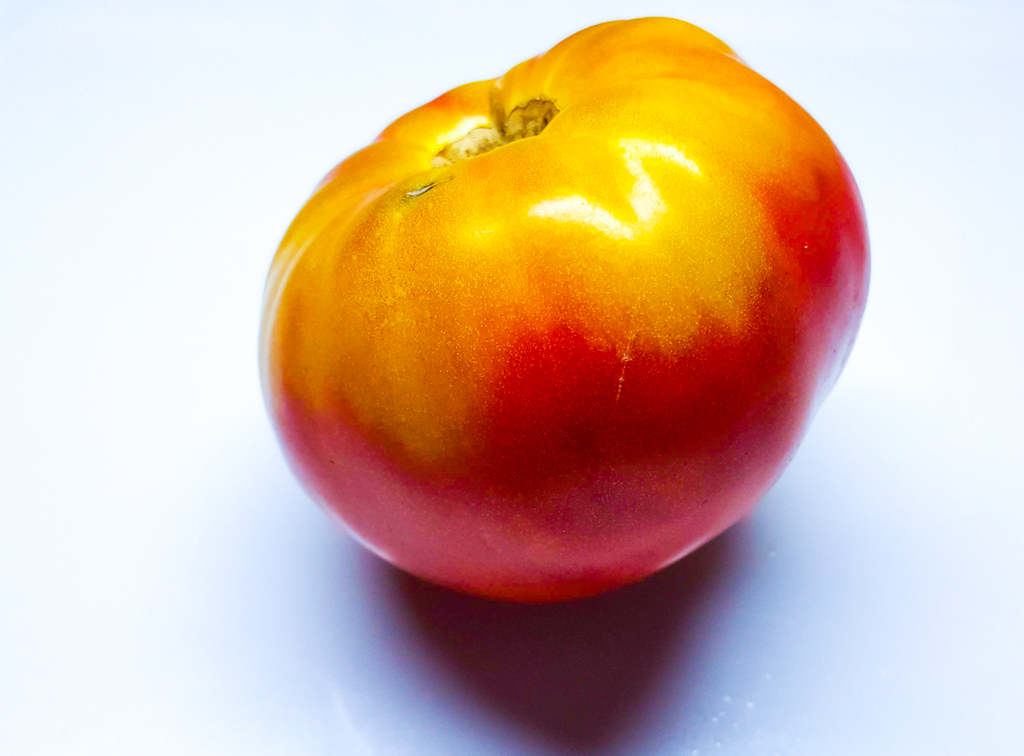
I confess, I am not Italian. I could not be more proud of my Scotts-Welch heritage: the indomitable, against-all-odds strength of my ancestors, the unsurpassed beauty of the rugged highlands purple with heather. The first time I flew into Scotland, I cried as the plane circled Edinburgh. It was like coming home. "Amazing Grace" played on the bagpipes just slays me. And, ah yes, men in kilts!
But if I had to pick another heritage, Italian would be a top contender. Such an incredible history Italians have, with so many brilliant contributions to the modern world. Explorers, inventors, artists…Columbus, Marco Polo, Michelangelo. Lest we forget, Joltin' Joe and Sophia Loren. Romeo and Juliet...only a couple of Italians could be so madly star-crossed in love. There's huge family, boisterous conversation, passion for life…there's the food!
And there's Guido and Margaret Rossi.
His parents brought him over from Italy when he was a child. They'd been married 65 years back when I knew them, more than 30 years ago. I rented a small, decrepit, one-room cabin on their ranch for a few bucks a month. The ranch lay up at the end of a holler, the last of several ranches, encompassing thousands of acres, at the foot of the Flat Tops, where they'd eked out a life in the rugged mountains of Routt County, Colorado. They built their farmhouse together as newlyweds, just the two of them. No architect, no blueprints, no building code, no construction crew; just Guido and Margaret, hand tools, and love. Back in the day, Guido ran hundreds of head of cattle on his more than 800 acres. Now it was mostly quiet. I can still see him on his rusty, old tractor, one denim suspender hanging down from his faded overalls, plowing the garden each spring. Margaret had a green thumb. She saved seeds and together they planted and tended it.
Margaret couldn't have children, so they'd adopted a little boy and a little girl. The boy turned out badly. He grew up to die in a fight behind a bar, leaving a young widow, two babies, and his momma behind. The girl grew up to become a doctor. She moved far away to California and didn't call much. They were proud of her anyway.
Margaret had a sharp tongue and wrote poems. One, in particular, I recall, "Blaze Orange and Bull$4!T", was about men and their hunting and the lies they tell. Guido had selective hearing. Margaret could talk for twenty minutes about what he needed to get done and he wouldn't hear a word she said. But try whispering something in the kitchen you didn't want him to know, and he'd be hollering from the living room for the details. Now and then he'd pick up the party line telephone, which served several other area ranches, listening quietly to see what was going on in the valley. His deep, mostly-toothless, barrel laugh came easy and filled up a room.
After 65 years of marriage, and all the joy and sorrow life had handed them, Guido and Margaret Rossi would sit on the couch each evening, holding hands. They're long gone now. I have never forgotten them, but I hadn't thought of them in years.
"I've got a tomato for you," my neighbor Travis told me, and he reached over the back seat and handed it to me. "It's an Italian heirloom." We were driving back from the emergency room where he'd taken me after I laid open my hand with a grafting knife. "A friend gave it to me. His grandmother brought the seeds over from Italy decades ago. She's been growing them and saving the seeds all these years." From there, we fell into a discussion about how to save tomato seeds and what the proper definition of "heirloom" really is.
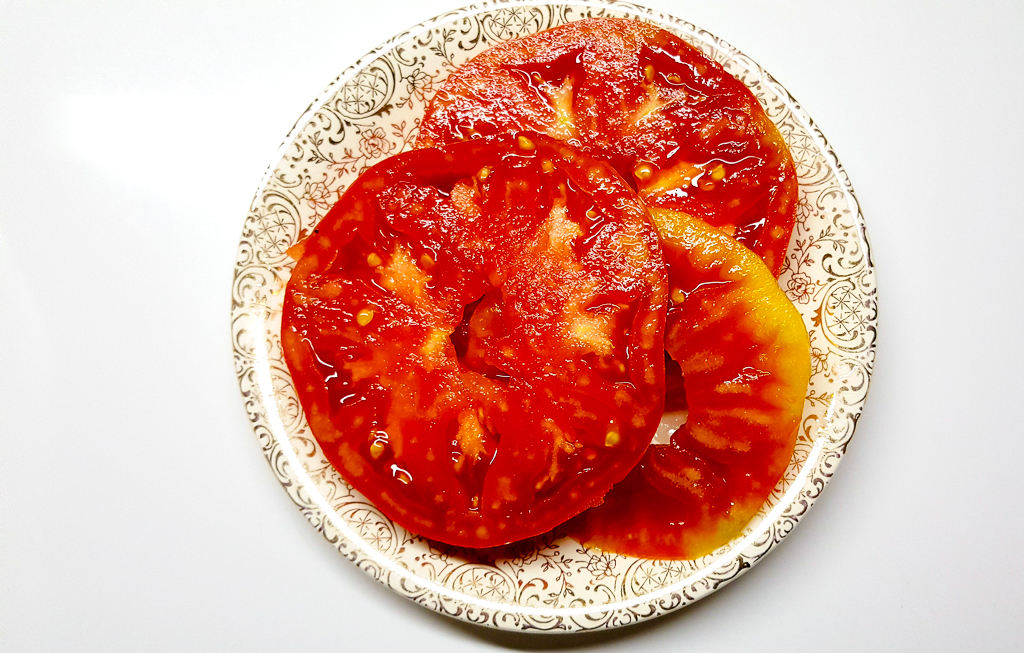
My prize Italian heirloom tomato was probably a day or two past ripe when I sliced it open. But I could immediately see why Nonna had been so careful to bring the seeds all the way from Italy all those years ago, and to carefully preserve them year after year. It was a lovely two-tone burgundy-red, with a deep, golden shoulder. I've never seen one quite like it. Not too small, not too big, a nice slicing size, meaty, juicy, with a delicious balance of acid and sweet. The skin was a little on the thick side, which would make it easy to peel for cooking, and less prone to bruising. It would make a fabulous sandwich tomato, or canned whole for a taste of June in January. I carefully scooped out the seeds before eating the whole thing standing over the kitchen sink with a salt shaker, thinking of Guido and Margaret.
HOW TO SAVE TOMATO SEEDS - ITALIAN HEIRLOOM OR OTHERWISE
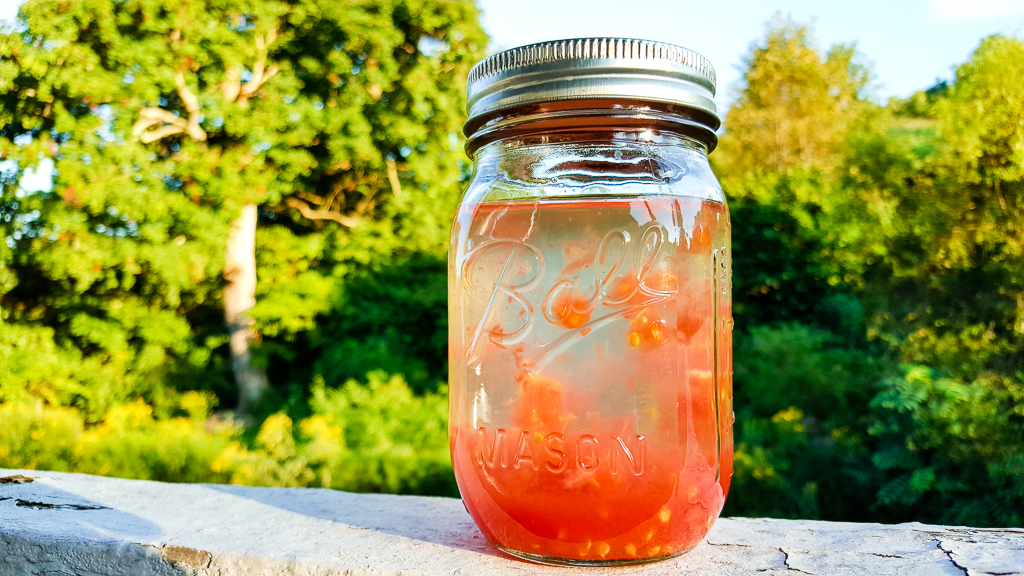
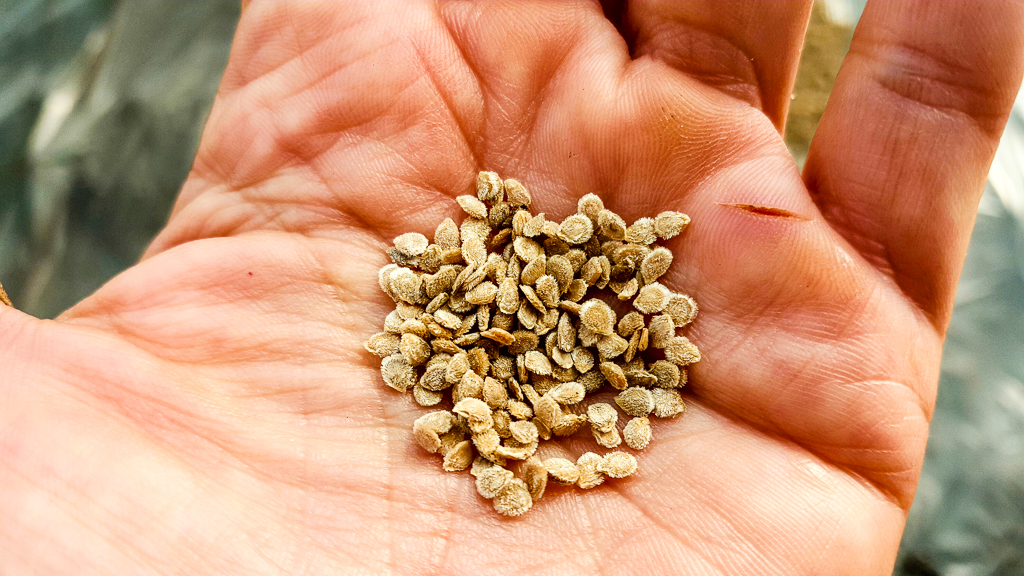
Saving tomato seeds is easy. The seeds are enclosed in slippery gel casings. The casings, which break down naturally when the fruit falls to the ground and rots, contain growth inhibitors which keep the seeds from sprouting while they're still inside the tomato. Although you can just spread seeds out on a paper towel to dry them, fermentation of the seeds allows you to manually speed up the process of breaking down the casings, which makes the seeds easier to store without getting moldy, and ensures a stronger germination next spring.
Allow your fruit to ripen fully and then scoop out the seeds, along with the gel surrounding them, before you eat or cook the tomatoes. Put the seeds and gel in a glass jar with some water. Stir or swirl the mixture once or twice a day. The mixture will ferment and the seeds should sink to the bottom within five days, while the goop rises to the top. Pour off the liquid (you may want to hold your nose for this step), rinse the seeds and spread them out to on paper towels to dry. If the casings aren't completely removed after the first fermentation, repeat it a second time. Once the seeds are completely dry, store them in zip lock bags in the freezer labeled with their name, variety, and the date you harvested them. Use the seeds within a year; the older the seeds, the lower the germination rate and vigor.
Most tomatoes are self-pollinating, but a few kinds (currant or potato-leaf types such as "Brandywine") can be cross-pollinated by insects. Save seeds that haven't been cross-pollinated to get tomatoes true to type. Hybrid tomatoes, which include most modern varieties, produce offspring that won't necessarily look or taste the same as the parents.
Preserving heirloom fruits and vegetables is crucial to the simplicity and integrity of our food. Sure, new hybrid tomatoes taste okay; they last longer and you can ship them further. And I suppose there's something to be said for breeding cucumbers that don't make you burp. But food is family, history, memories, and heritage. It's big, boisterous families gathered around the table over pasta and laughter. It's an old man and woman planting their seeds and tending their garden. Some things just stand the test of time. Nonna's seeds, which may perhaps be the last of their kind left in the world, make life a little richer.
Now, that's Italian!
 Bill Porter, Broker
(304) 612-3746
Bill Porter, Broker
(304) 612-3746207 Aurora Dr
Morgantown, WV 26508
WEST VIRGINIA LICENSES BROKER WVB240300963
AGENCY 010271-00


 Translate

Office License No. 010271-00