
 RSS Feed
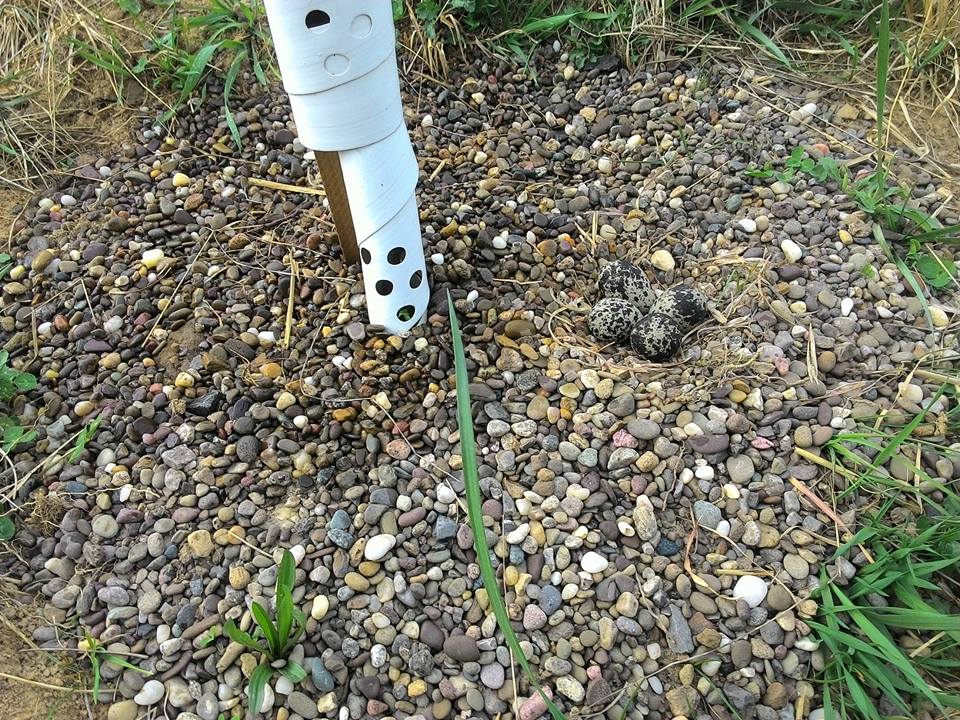 It's been a year since the passing of my friend, Bob Wilcox. As I prepare to graft 60 trees, this article from my 2015 archives is both a "how-to" refresher and nod to Bob. The 25 trees mentioned in the article are all going strong. I moved them from the garden bed to the orchard late last fall, and they're preparing to spend their first year in the U-pick. A tern has made her nest at the foot of one (look closely!); she and her mate vigilantly guard their unhatched charges. That, too, is a nod to Bob who knew every bird by their call alone and loved spending summer evenings on the porch looking up at the orchard. A year has passed, my friend, but you are not forgotten.
"Adam's Apples - An Amateur
Explores the Pomaceous Fruit"
Four years ago, when an apple orchard in Fairmont was still just a dream, I sat at my computer in Gainesville, Florida, and wrote a business plan for Zion Heritage Farm. I am never as far along with things as I would like to be but when I look back at that plan, and then look around me, I am amazed at how far I've actually come. And I don't just mean the 810 mile drive from Gainesville to Fairmont.
With a whole lot of help from the Lord and my son Wes, I was able to buy an 8-acre farm which was family land three generations ago. I live in an ancient handmade brick house built by my Prickett ancestors sometime around 1860. I've cleared and cleaned and planted. Glancing up from my computer at the hillside in front of my house, I see some 200 organic sapling apple trees, mostly heritage apples, with another 40 or so trees arriving on Good Friday. I'm working toward the irrigation I planned for back then, and a high tunnel, marketing plans…the list of dreams goes on.
One of the goals on my business plan was to begin grafting my own apple scion wood onto specialized dwarfing rootstock. It's not something I've had on the front burner; there's been so much to do, while holding down both a full-time, and part-time, job to pay the bills and get the farm up and running. But it suddenly became urgent as my dear friend, Bob Wilcox, neared the end of his life.
For the last three years Bob has been my friend and helper. He passed away this week at the age of 86. When I met Bob, his wife Betty had passed

Transparent Apple Sauce with Cinnamon
away some five years back, and then his brother. Mostly, Bob just sat in the house and watched TV alone in his living room. We met at church, and somehow became buddies. During our 3-year friendship, he was an almost-daily visitor to the farm in the spring and summer. He grew up a poor farm boy and loved it here. Frail, he couldn't help a great deal physically, but he was always there with knowledge and any kind of assistance he could possibly provide. If ever I needed a particular tool or some such thing, Bob would say, "I think I have one of those in the garage." And he always did. When I look around at all the clearing that's been done, the progress that's been made, I have Bob to thank for so much: for the use of his John Deere, his truck and trailer, chainsaw, 4-wheeler, every kind of tool under the sun, and a whole lot of patience and wisdom.
One of our late summer pastimes was making applesauce. Bob had a lone White Transparent apple tree (aka Yellow Transparent) in his yard. Transparents are an heirloom Russian apple, discovered in the early 1800's. They ripen in July to a yellowish, almost white apple, a little on the tart side, but with just the right amount of sweet. Easily bruised, they don't store well at all, and have a short window of "just right." If you pick them three days too early they'll be green and sour; three days too late, and they'll be mealy. But they make the very best delicate, pale applesauce you ever ate. I'd climb the rickety ladder and toss the apples down to Bob, who would holler up for me to be more careful, and then we'd make sauce in my kitchen and split the profits.
 A few weeks ago it became clear Bob would soon be with Betty again. I thought about the times we'd had, the things we'd accomplished, all he had taught me, all he had put up with from me. He was going to leave such an incredible void. I thought about how his house would be empty now when I drove by. Someone else will probably live there soon; a stranger, perhaps, who never knew him, or what an incredible man he was. And I thought about that apple tree.
Apple tree seeds do not grow true to type. If you plant a seed from a Gala apple it will grow. But it will probably not be a Gala apple tree. There's an off-chance it will turn out to be some fabulous new apple but it's more likely to be a useless mutt. Grafting is the only way to ensure that you get the type of apple you want, and the only way to keep heritage apples from going extinct.
Suddenly, grafting became the most important thing on my ever-evolving, never-diminishing to-do list. I sat by Bob's hospital bed and told him I was going to go steal scion wood from his apple tree. His eyes twinkled as he fussed at me not to climb too high up the ladder for "just one more twig." I got on the phone with Cummins Nursery, and ordered 25 Geneva 11 rootstocks. Then I threw a ladder in the car and drove to Bob's to snip scion.
I've read a lot about it, but I've never grafted before. There are several types of grafts: whip grafts, cleft grafts, side grafts, bud grafts, and bridge
 grafts. Different methods are used depending up your need and the time of year. For my purposes and time of year (late March/early April), a whip graft, or "whip and tongue graft," was in order.
"Scion wood" is simply twigs from last year's growth. They can be cut in winter and held in a cold place, wrapped in wet newspaper, until it's time to graft. Or the scions can be cut at the last minute before grafting, just before they're about to break dormancy. Ideally, your scion should be the same diameter as your rootstock – in my case about 3/8″. The goal of whip grafting is to match up your rootstock with your scion, cutting each piece at a matching angle, making sure that the cambium layers (the very outside layers of the twigs) match up. Then you notch a little tongue in each piece, wedge the tongues together, and wrap it tightly. The cambium layers callus over, forming a scar which binds the two pieces together. If your rootstock and scion wood are not the same diameter, then the trick becomes to perfectly line up one side of each of the pieces. Almost all of the one-year-old growth on Bob's tree was 1/4″ at best.
One at a time, I carefully cut each piece of scion and rootstock, doing my best to match the angle of the cuts, notched in a tongue on each piece, and slid them together, matching up as much of the cambium as possible on one side. I trimmed the scion, leaving only one or two buds on each piece, tightly wrapped the pieces together with grafting tape, and sealed the tip of the scions with grafting compound.
It's been a while since I looked back at that business plan, written nearly five years ago and far away. But I opened it this morning and read, "By the third year we will be grafting our own root stock." We're right on schedule, Bob. I'll see you when my chores are through.

Bob and Heather
Grafting Apple Tree Scion Onto Dwarf Rootstock
– the basics of whip and tongue bench grafting –
(click on images to enlarge)

Apple scion and rootstock, cut at matching angles.
Make a straight, slanting cut, about 1-1/2" long on both the scion wood and the root stock. Make the cut straight and even – one stroke with a sharp knife should do it. Look at how your pieces match up from all sides, and tidy your angle if needed. This was my first try; it was a bit steeper, longer angle cut than necessary. Consider practicing a few times on twigs from a shrub or some such thing, before you start with your valuable scion and root stock.

Notching a Tongue into Apple Scion Wood. The cambium layer is the thin, bright green layer seen at the outside edge of the cut (click to enlarge the view).
For the "tongue," make a straight draw cut (not split), beginning near the top and cutting about the full length of the angle cut. In my case, it was about the width of my grafting knife.

Match the two parts together, interlocking the tongues. Unless the scion and stock are exactly the same size, make certain the scion cambium layer is in contact with the rootstock cambium on one side. If the toe of either the stock or scion extends beyond the heel of the other (as it does in this photo), cut if off evenly.

Newly Grafted Apple Trees
Bind tightly with tape, which seals the wounds and holds the pieces together. Cut off excess scion wood, leaving only one or two buds. Cover the binding tape with grafting compound, as well as the cut tip of your scion wood to seal in moisture. If you're working with more than one type of scion wood, be sure to mark your grafts so you can remember what's what.
After such major surgery, the grafted trees need time to heal and scar over. Put the root ends in a bag of wet sawdust, moist sphagnum moss, or shredded newspaper, to keep them moist. Keep your grafts at room temperature for about one week. Then they should be put in a cold place (about 35-40 degrees) for six weeks. My cellar is a little warmer than that, so they went in the fridge. If you use the fridge, you'll have to remove all fresh fruit and veggies; they give off etheline gas which can destroy the plant tissue. Put them in indirect sunlight for a couple of days before planting out in full sunlight.
Transfer them to the garden where they will live until this fall, or the fall after, before going into the orchard with the big boys. Regular watering during this period is crucial. Once the trees start to grow – 6 to 8 weeks in the ground – remove the grafting tape to keep from girdling (strangling) the trees. Be very gentle with your saplings; they will be brittle at the graft union and easy to snap.
Reasons for Graft Failure
- Stock and scion were not compatible.
- The cambiums were not meeting properly.
- Scions were upside down.
- Grafting was done at the wrong time.
- Understock or scion were not healthy.
- Scions were dried out or injured by cold.
- Scions were not dormant.
- The graft was not properly covered.
- The scion was displaced by storm, birds, or other means.
- The graft was shaded too much by other growth.
- The graft was attacked by insects or disease.
- The graft union was girdled because tape was not cut or released in time.
Sources for Free Scion Wood
- Friends or relatives who have apple trees you like will probably allow you to take a few cuttings.
- A local nursery may allow you to have the cuttings when they prune fruit trees.
- Orchards in the area will prune their trees in the winter and will likely allow you to have the cuttings, especially if you offer to help!
- The USDA (U.S. Department of Agriculture) maintains a live "Germplasm Bank" of thousands of fruit varieties. You can contact them for scion.
Links of Interest
Grafting Instructional Brochure from Pennsylvania State University
Seed Saver's Exchange – a non-profit dedicated to preserving heirloom apples


 Translate